“Women, women everywhere and mostly in the air,” announced a 1934 newspaper article about an all-women’s air meet at College Park, complete with races, acrobatics, and parachute jumps. Another account drew attention to the handful of women from the University of Maryland who were learning to fly at the airfield. Yet despite this early interest in women, such stories later sat in the collection with little attention or assessment.
Traditionally, the museum’s focus has centered on the airplanes, their uses, and who flew them, including the early story of Wilbur Wright training two Army officers at College Park in 1909. In the 1990s, the museum introduced more inclusive programs, such as talks about the Tuskegee Airmen, yet it continued to spotlight aviation “firsts,” military history, and airmail. This emphasis shaped how the collection was handled: a few select stories and key figures determined what was cataloged, valued, or displayed. As a result, certain materials and the stories tied to them were left in the background, although they were part of the museum’s holdings.
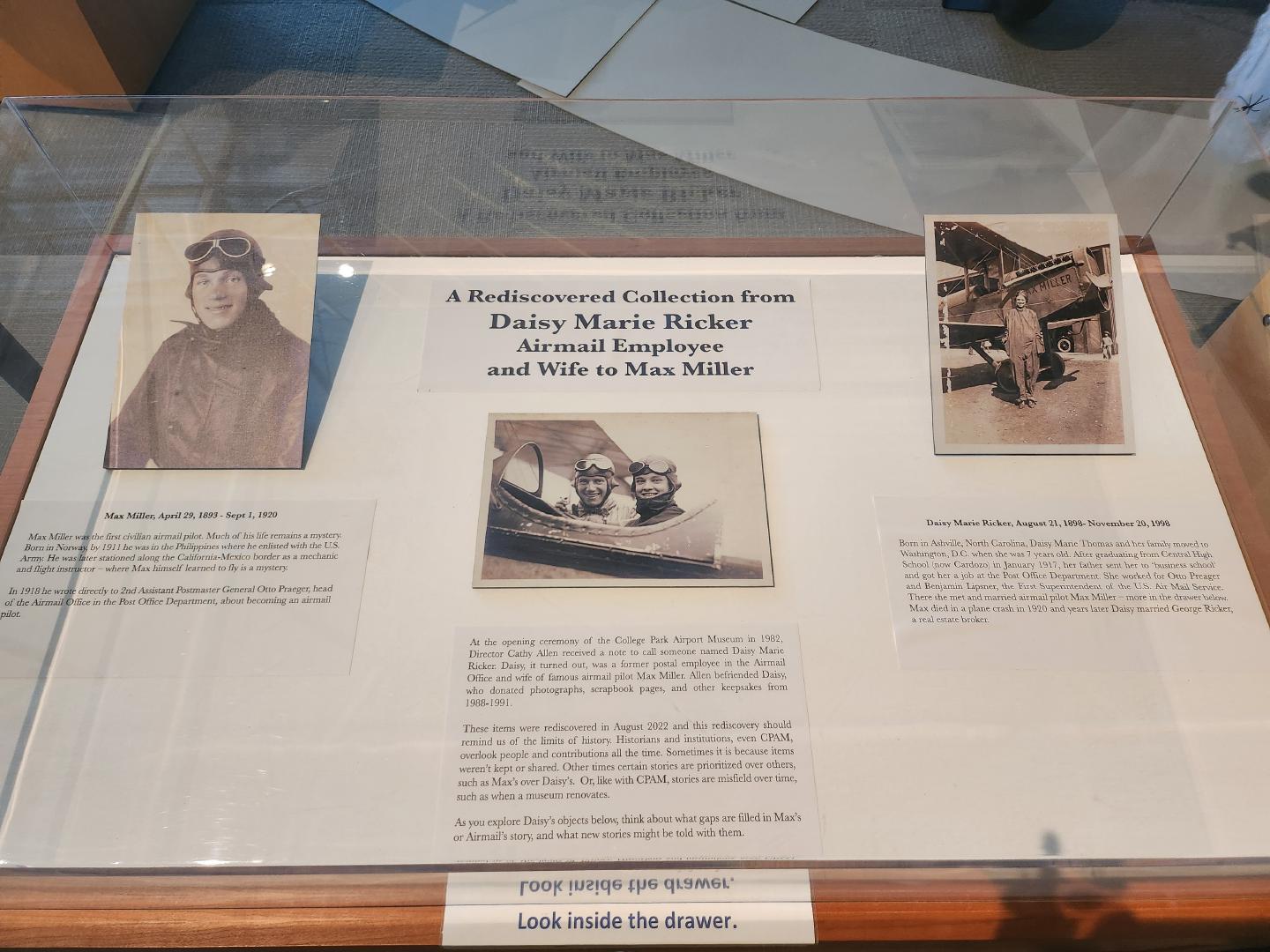
The museum holds a non-circulating library and a collection of documents, photographs, artifacts, and personal materials that support its exhibits and research. For years, gaps in how certain items were prioritized and managed affected which stories could be told. In recent years, the museum curator has begun reassessing the collection, surveying its contents, and updating the catalog to address what had been overlooked. This work has expanded the catalog to bring forward underrepresented people in aviation, including women, Latino and African American aviators, and those with disabilities. For example, the museum now features exhibits on Latina women in aviation and on the Columbia Air Center, once a Black-operated airport in Prince George’s County.
Although the museum is best known for its displays, current work on the collection aims to support research by students, historians, and other visitors. As the museum continues to reassess its collection, staff are creating a new searchable database that gathers images, documents, books, and artifacts in one place. This effort will allow users to explore the material by many topics, including people and stories that were less represented in the past.
The museum’s collection reminds us that exhibits often provide the first glimpse of what a museum holds. It also shows why fully assessing and cataloging the collection is essential. These steps help support more inclusive representation and give researchers and students the context they need to study the materials more deeply.
]]>